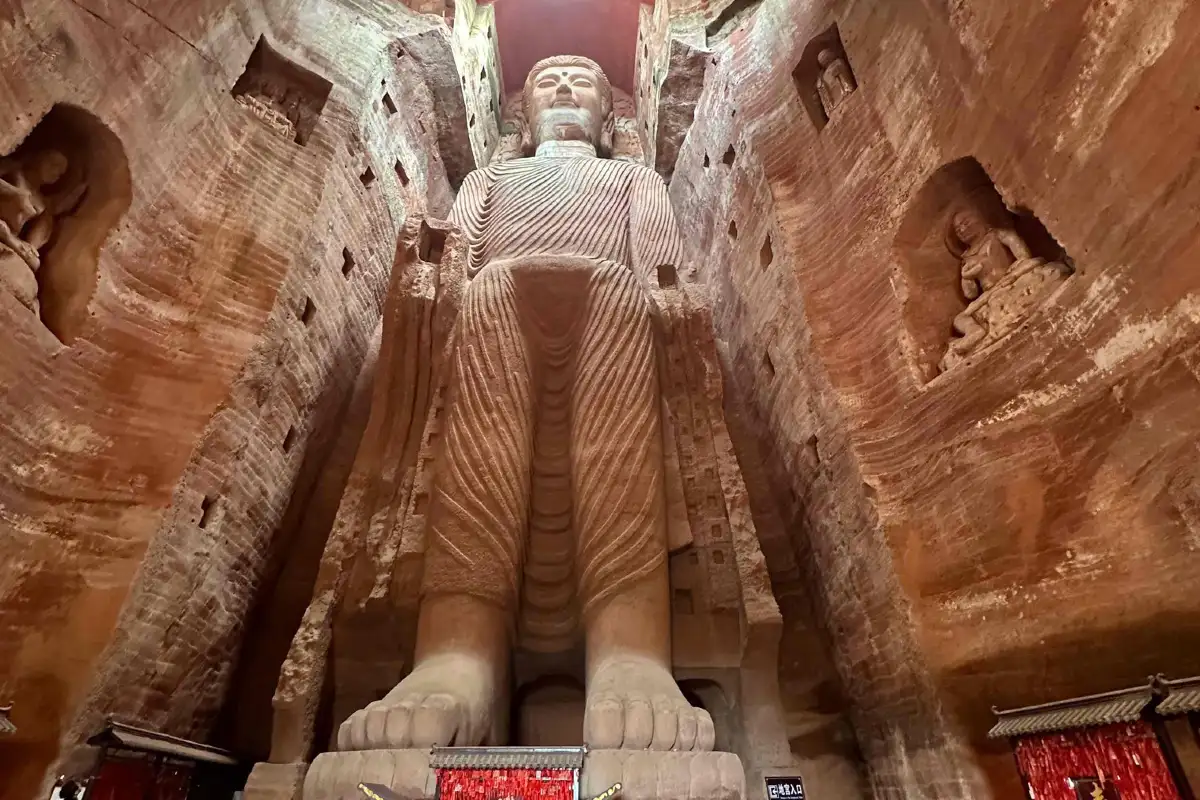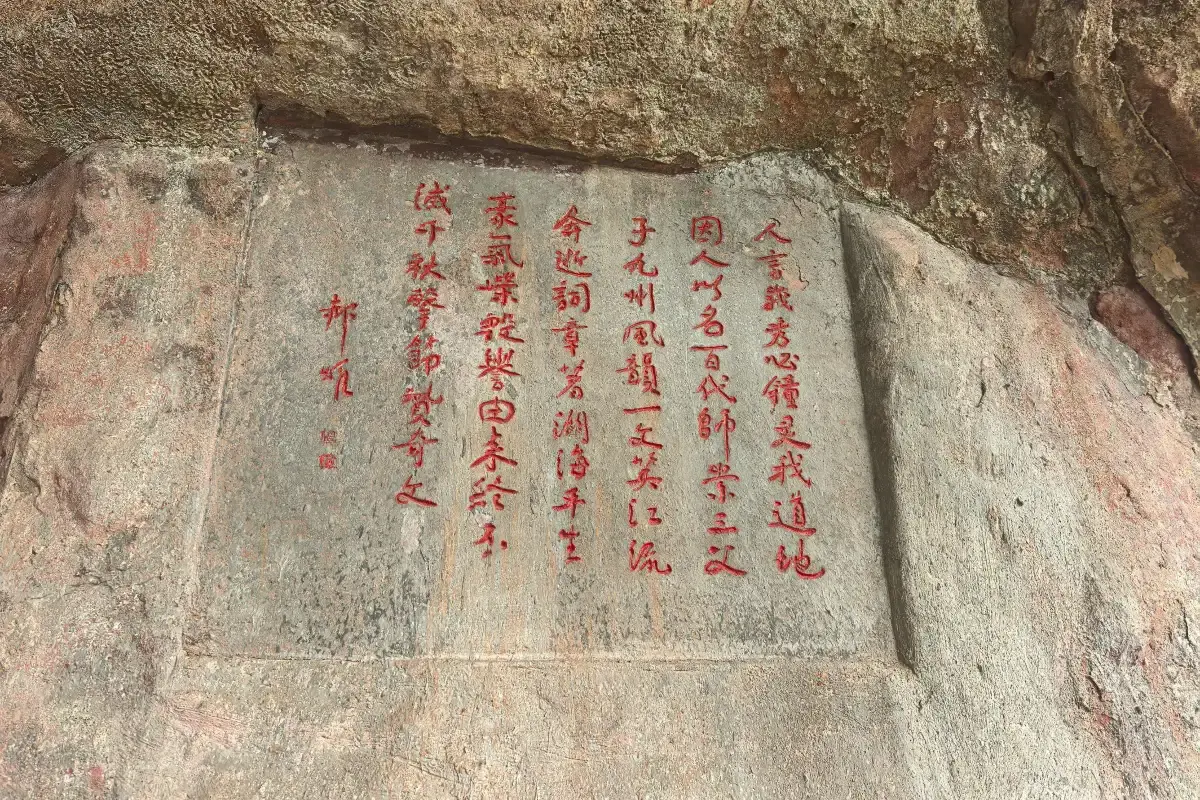











Most visitors to Leshan sprint from the Buddha’s head down the plank road, glance at the feet, and leave — never realising the scenic area has a quieter, stranger, more poetic half. Wuyou Temple, the cliff niches full of small carved Buddhas, and the famous “Buddha within a Buddha” panorama belong to that other half. If you have the time, this is the side of Leshan you will remember longest.
🧾 Quick Facts
- 🛕 Wuyou Temple predates the Giant Buddha itself
- 🐉 Wuyou, Lingyun and Guicheng mountains form a reclining “giant Buddha”
- 🌉 Reach the Wuyou side via the Haoshang Bridge area
- ⏱️ Add 1–2 hours to the recommended 3–5 hour visit
- 🕗 Site open 08:00–19:00 (admission ends 17:30)
🌉 Crossing to the Quieter Bank
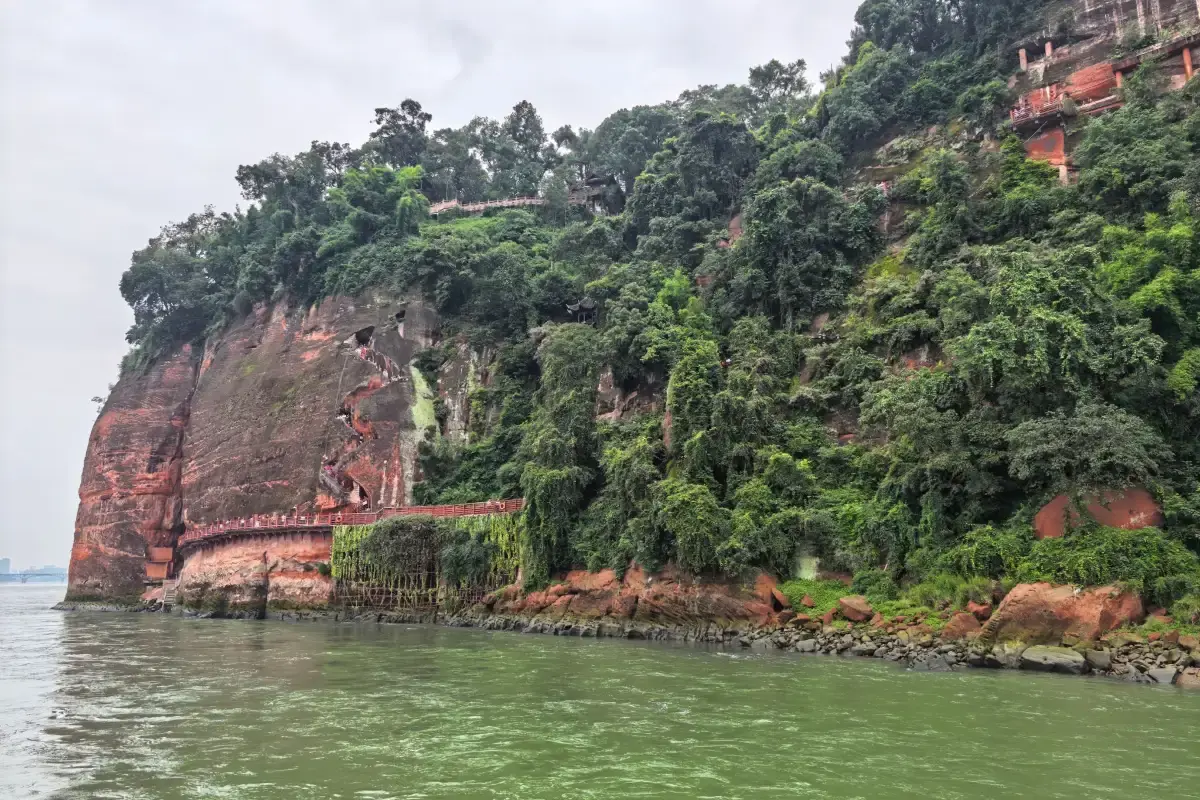
The scenic area is really two mountains: Lingyun, where the Giant Buddha sits, and Wuyou next door, joined by walking routes through the Haoshang Bridge area. The crowd flows almost entirely one way — head, plank road, feet, exit — so the simple act of crossing to Wuyou thins the noise within minutes. Paths quiet down, the river reappears between trees, and the site starts to feel like what it actually is: a working religious landscape rather than a single photo opportunity.
Give the crossing thirty unhurried minutes and treat it as the decompression zone of your visit. The Haoshang Bridge area makes a natural hinge between the two mountains, and once you are on the Wuyou side the atmosphere shifts from landmark to landscape. You will hear birdsong, temple bells and very little else.
| At a glance | Lingyun side | Wuyou side |
|---|---|---|
| Star attraction | The roughly 70-metre seated Buddha | Cliff niches, caves and temple calm |
| Crowds | Heavy at the plank road and feet | Light through the day |
| Best for | First visits, the icon itself | Slow travel, carvings, photography |
| Time to allow | 2–3 hours | 1–2 hours |
🐉 What Wuyou Is — and the Hornless-Dragon Legend
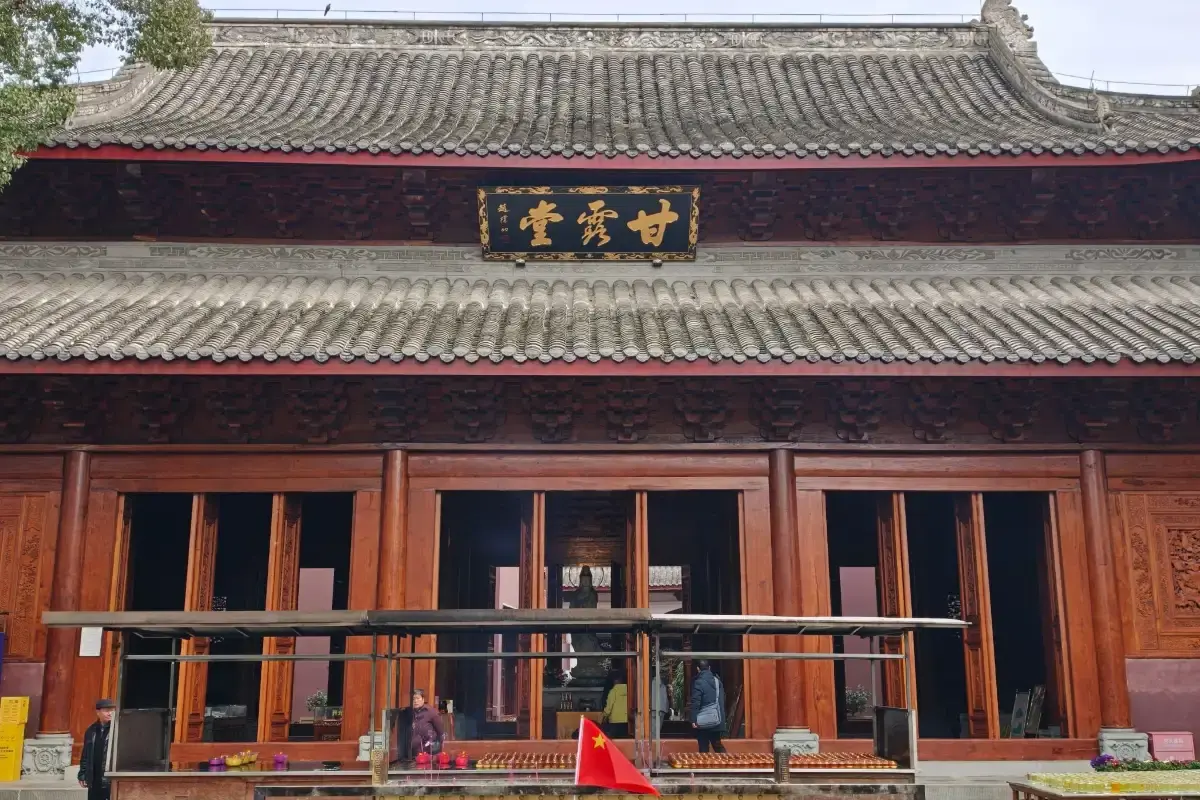
Wuyou Temple is older than the Giant Buddha: monks were established on this hill before Haitong ever began carving in 713. Its halls and courtyards still function as a working monastery, with incense, chanting and an unhurried rhythm that makes Lingyun’s main axis feel metropolitan by comparison. For a structured tour of both monasteries, our Lingyun and Wuyou temples guide walks the pair in order.
The name carries a legend: locals heard the mountain’s silhouette resemble a wuyou — a hornless dragon of Chinese mythology — gliding through the landscape, and the hill took the creature’s name. Whether or not you can see the dragon in the ridge line, the story tells you how this place was always seen: as something alive, not just rock. Stand in a quiet courtyard and the myth feels less fanciful than it sounds.
Inside the temple, expect modest halls, old trees and a steady drift of incense rather than a ticketed attraction. Monks go about their day, visitors drift between courtyards, and the whole place runs at walking pace. That is not a lack of spectacle — it is the point.
🪨 Hundreds of Small Buddhas in the Cliffs
Between and around the temples, the cliff paths are lined with niches holding hundreds of small carved figures — Buddhas, guardians and donors, many dating to the Tang era alongside the great statue itself. Some are crisp, some are weathered almost to silhouettes, and the contrast is part of the charm. There are no queues here, so you can linger as long as curiosity lasts.
In the Mahao caves and the Zhaiwania area, narrow crevices open into chambers where carving covers the rock close to arm’s length. Bring the same slow eyes you would bring to a museum: folded hands, faint smiles and lotus patterns reveal themselves gradually. This is also the best photography on the Wuyou side, because the carvings sit close to the path and the light filters in softly — go slowly, since the crevices are cool, dim and wonderfully atmospheric in the early afternoon.
🛌 The “Buddha Within a Buddha”, Explained
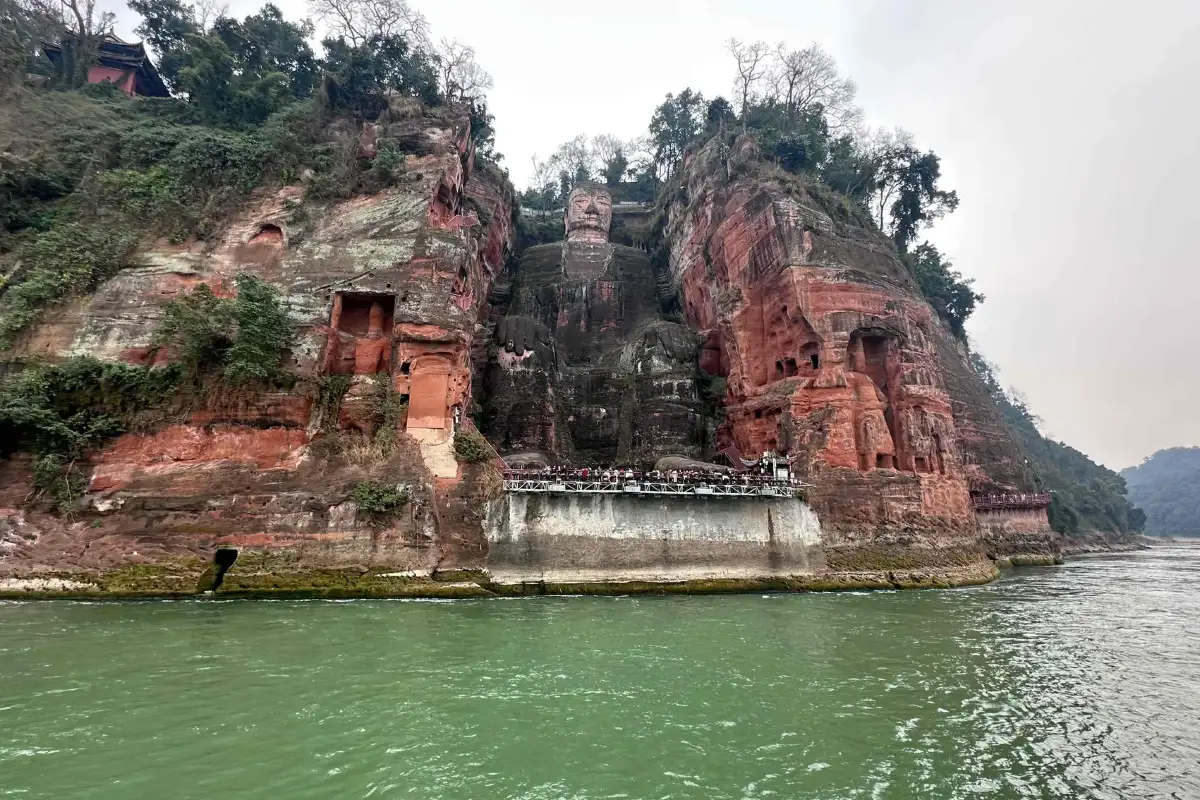
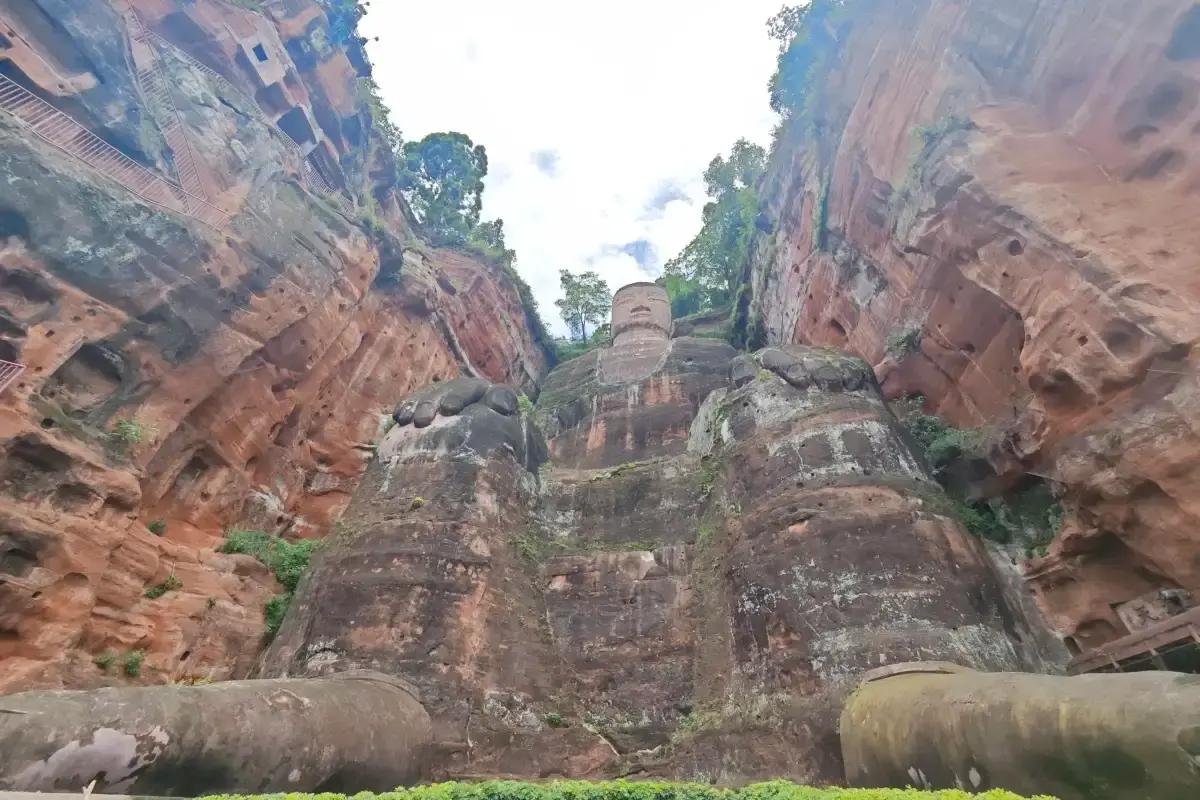
Here is the panorama that gives this side of Leshan its mythology. Seen from the river, the outlines of Wuyou, Lingyun and Guicheng mountains run together into the shape of a reclining giant Buddha, and the seated Giant Buddha rests at its chest — a statue inside a sleeping colossus, or a “Buddha within a Buddha”. Once the outline clicks, the whole landscape reorganises itself in your mind.
The reclining figure is best appreciated from the water or from the riverside of Leshan’s old town, where the three mountain silhouettes line up cleanly. Daylight cruises give you the full geological pun; after dark, the night river cruise redraws the same outline in lights. It takes a squint and some imagination — and it is worth every second of the squint.
Photographers should also try the riverside promenade in the early morning, when the water is calmest and the mountains stack up most clearly. Even without a boat, a long lens from the old-town side can compress the three ridges into a single silhouette. It takes patience, and the payoff is a photo most visitors never get.
🧘 Who Will Love This Side
- Slow travellers who would rather sit in a courtyard than stand in a queue.
- Temple lovers drawn to working monasteries, incense and quiet ritual.
- Photographers hunting close-up carvings, soft light and empty frames.
- Return visitors who have already stood at the feet and want the story behind the icon.
- Queue-escapers — in peak season, Wuyou stays calm while the plank road crawls.
If you only ever see the head and the feet, you have seen the icon; Wuyou gives you the context that makes the icon mean something. It is the difference between visiting a monument and understanding a landscape, and it costs you nothing but time.
⏱️ How Long to Allow, and How to Fit It In
Give Wuyou a relaxed one to two hours, which slots comfortably into the recommended three-to-five-hour visit. The natural slot is mid-day, exactly when plank-road queues peak: cross over, walk the quiet paths, and return when the line has drained. Our one-day itinerary builds Wuyou into the afternoon for precisely this reason.
If your time is short, prioritise in this order: the head platform, the feet, the cruise, then Wuyou. And if you want the deep backstory of the carving itself — Haitong, the ninety years, the inscription — our history of monk Haitong’s project pairs perfectly with a slow Wuyou morning.
One warning: do not leave Wuyou for the very end of the day. Admission ends at 17:30, and the last hour is better spent at the river than on a hurried temple walk.
❓ FAQs
🎫 Is Wuyou Temple included in the standard ticket?
Yes — Wuyou sits inside the same scenic area and is covered by standard entry, which starts from $11.84. The separately ticketed extra is the Oriental Buddha Park, not Wuyou.
🚶 How do I get there from the Buddha?
On foot, following the paths from the Lingyun side through the Haoshang Bridge area. The signage keeps you on track, and the walk between the two mountains is short and mostly shaded.
👀 Where is the best view of the reclining Buddha?
From the river — a cruise gives the classic angle — or from the riverside of Leshan’s old town, where the three mountain outlines line up cleanly.
👵 Is the Wuyou side suitable for kids and seniors?
Mostly yes: the walking is gentler than the plank road, though steps and slopes remain. Take the paths slowly and the side rewards all ages.
🤫 Why is it so quiet?
Because the crowd funnels to one famous staircase, and Wuyou has no single “moment” — its reward is atmosphere, spread across an hour. That is precisely why its fans love it.
Leshan’s fame rests on one enormous statue, but its soul is spread across two mountains — and the second mountain asks nothing of you except time. Cross the bridge, find the small carved faces, squint at the river until the sleeping Buddha appears, and you will leave with something better than the standard photo. You will leave with the story.
Ready to See the Giant Buddha?
Tickets start from $11.84 and the scenic area is open 08:00–19:00 (admission ends 17:30).
🎟 Book Tickets on Trip.com 🎫 Check Klook Prices
Affiliate disclosure: as a Trip.com affiliate we may earn a commission when you book through these links — at no extra cost to you.