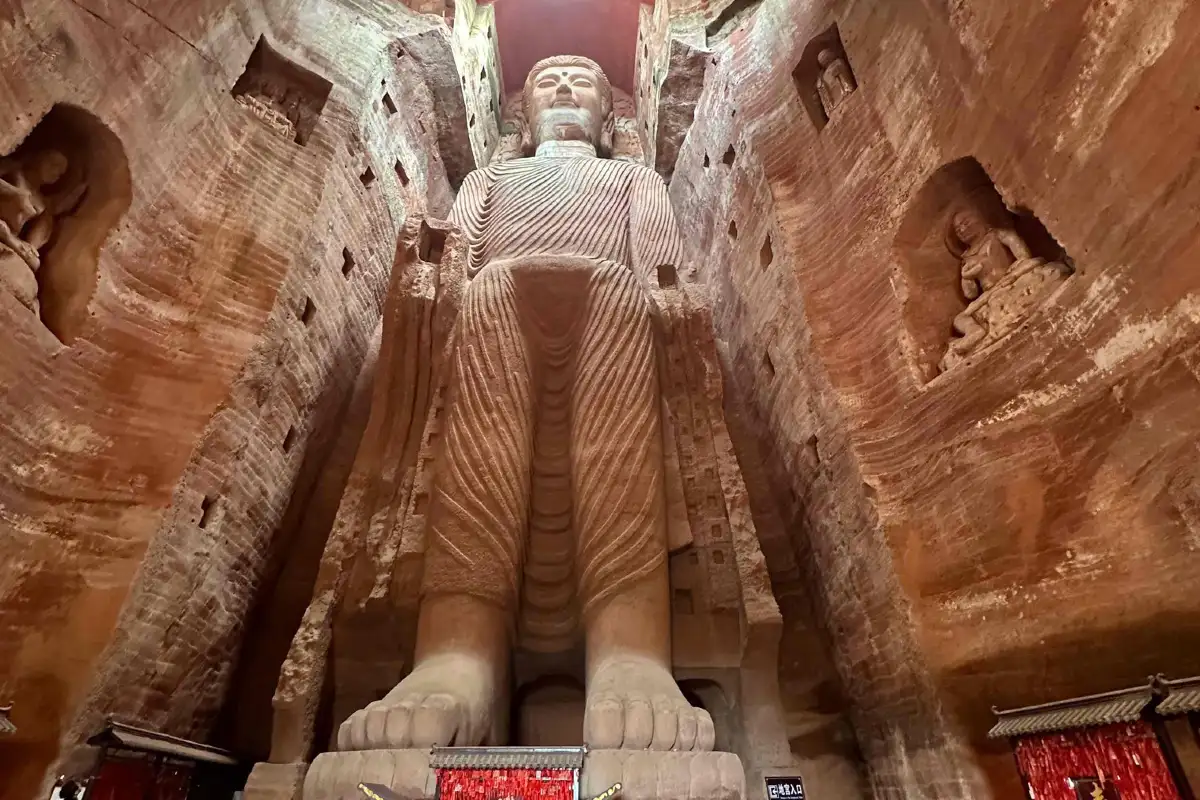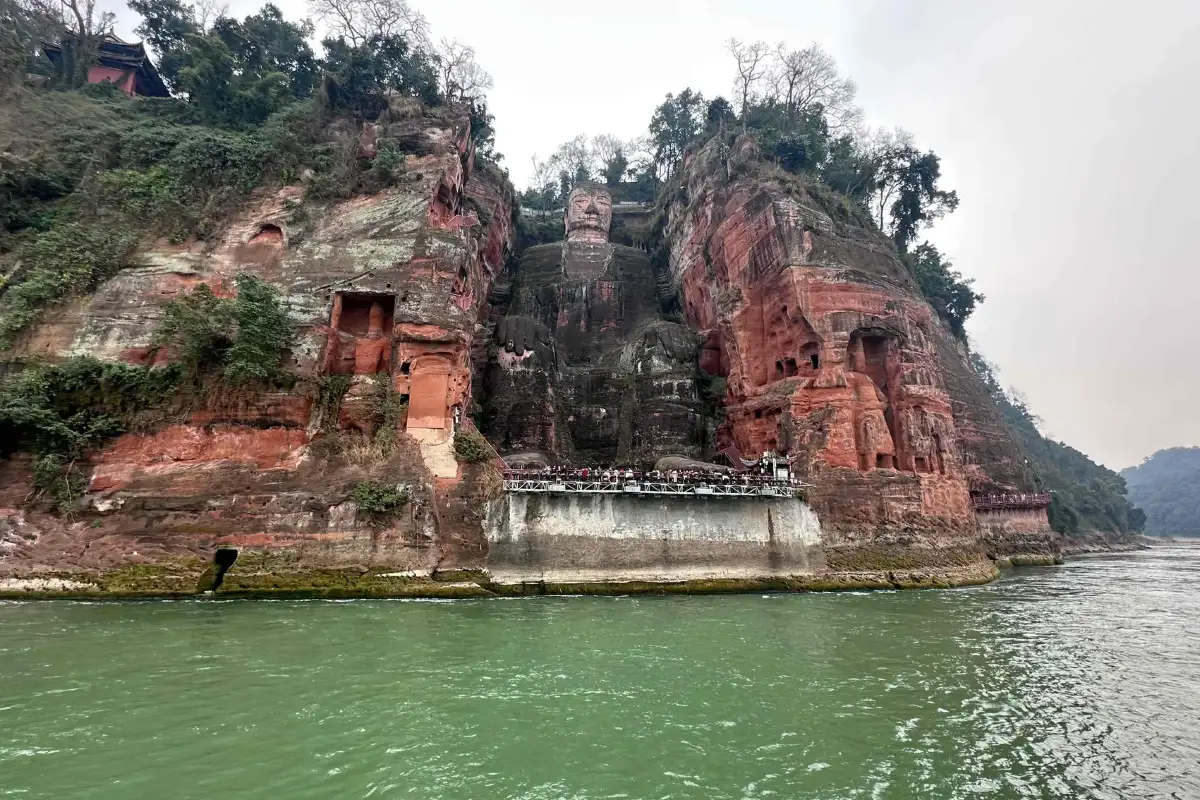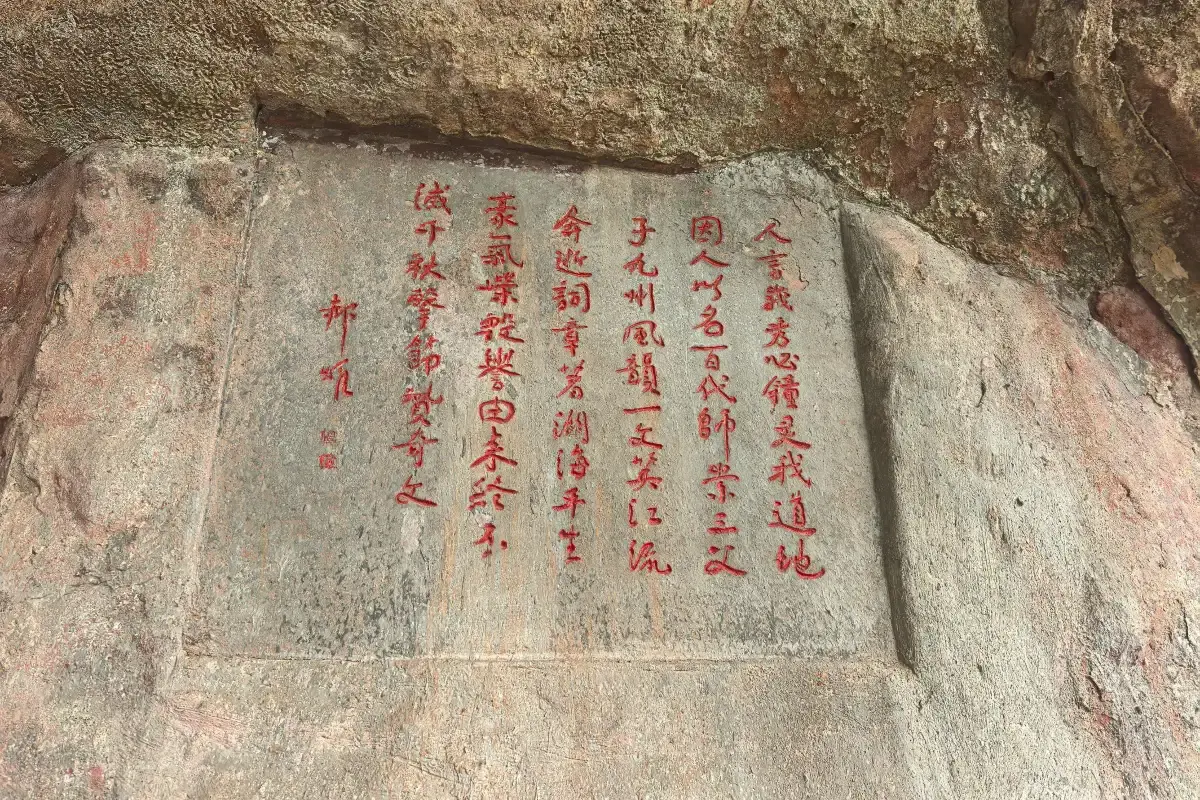











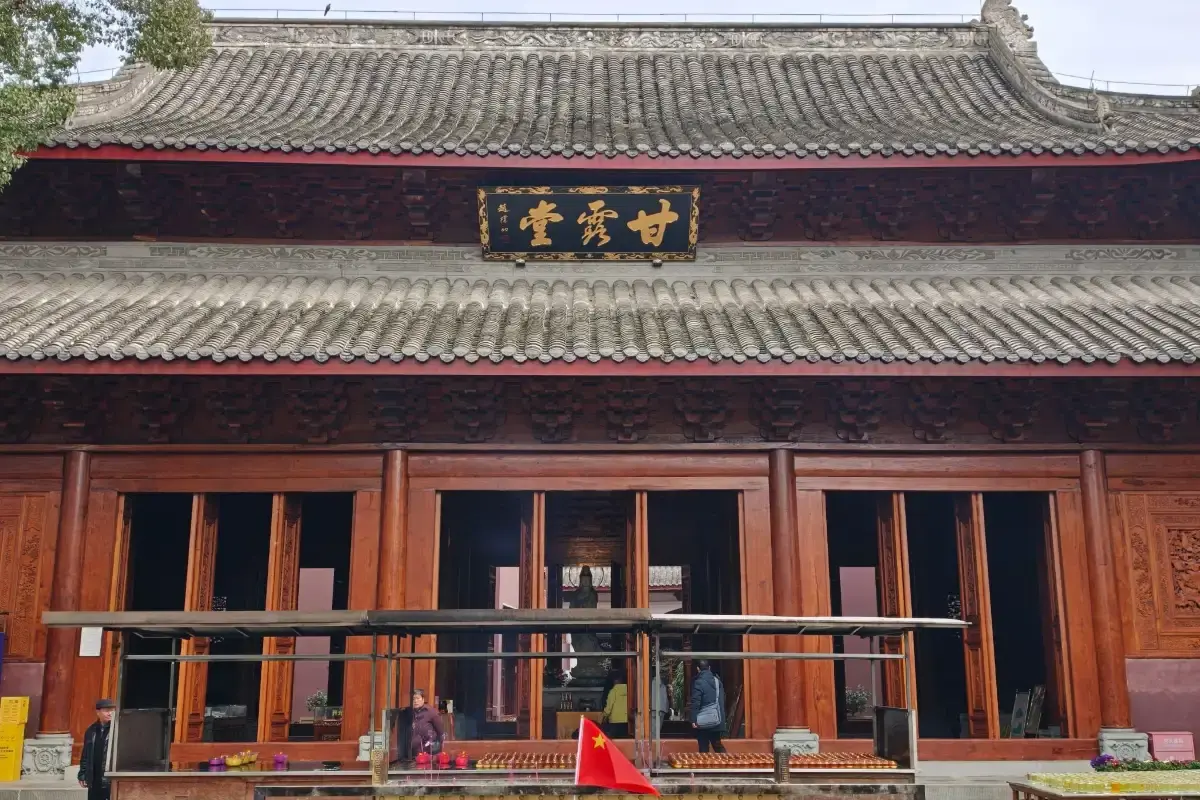
Most visitors arrive at Leshan for the Giant Buddha and leave talking about the temples. That is no accident: the colossal statue was conceived and carved by monks from Lingyun Temple, and the shrines scattered across Lingyun and Wuyou mountains are still living places of incense, prayer and quiet courtyards. This guide walks you through the temple-hopping side of the scenic area, so you can fit Lingyun Temple, Wuyou Temple and the smaller cliff shrines around your meeting with the Buddha himself.
🧾 Quick Facts
- 🕗 Open 08:00–19:00 (admission ends 17:30)
- 🎟 Entry tickets from $11.84
- ⏱ Recommended time: 3–5 hours including the temples
- 🛕 Two main temples inside the scenic area: Lingyun and Wuyou
- 📍 2435 Lingyun Road, Shizhong District, Leshan City
🛕 Why the Temples Belong to the Visit
It helps to flip the usual way of thinking about the site: the temples are not an add-on to the Buddha — they are the reason he exists. In 713 AD, the monk Haitong of Lingyun Temple began raising funds to carve a colossal Maitreya into the cliff face, convinced that the presence of the Buddha would calm the dangerous waters where the Min, Dadu and Qingyi rivers collide. The project ran for roughly 90 years, outlived its founder, and was carried forward by generations of monks and local officials. Knowing that story, the halls above the statue stop being a detour and become the first chapter of the visit.
🙏 A Story You Can Stand Inside
Few heritage sites let you walk from a biography into the monument itself within five minutes. At Leshan you can stand in the incense of Lingyun Temple, then descend past the very cliff the monks opened up. For the full background — the fundraising, the setbacks and the remarkable engineering — read our account of monk Haitong and the 90-year carving of the Buddha, then look at the statue with different eyes.
⛰️ Lingyun Temple: Directly Above the Buddha’s Head
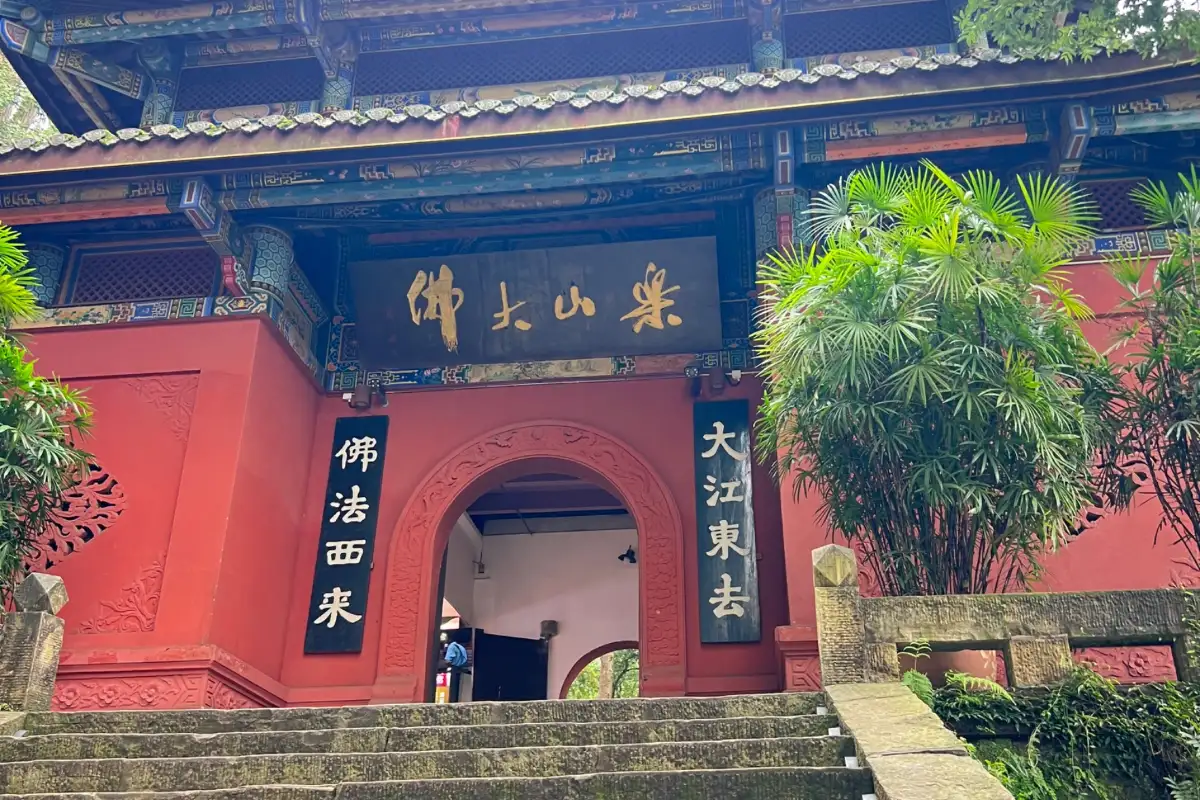
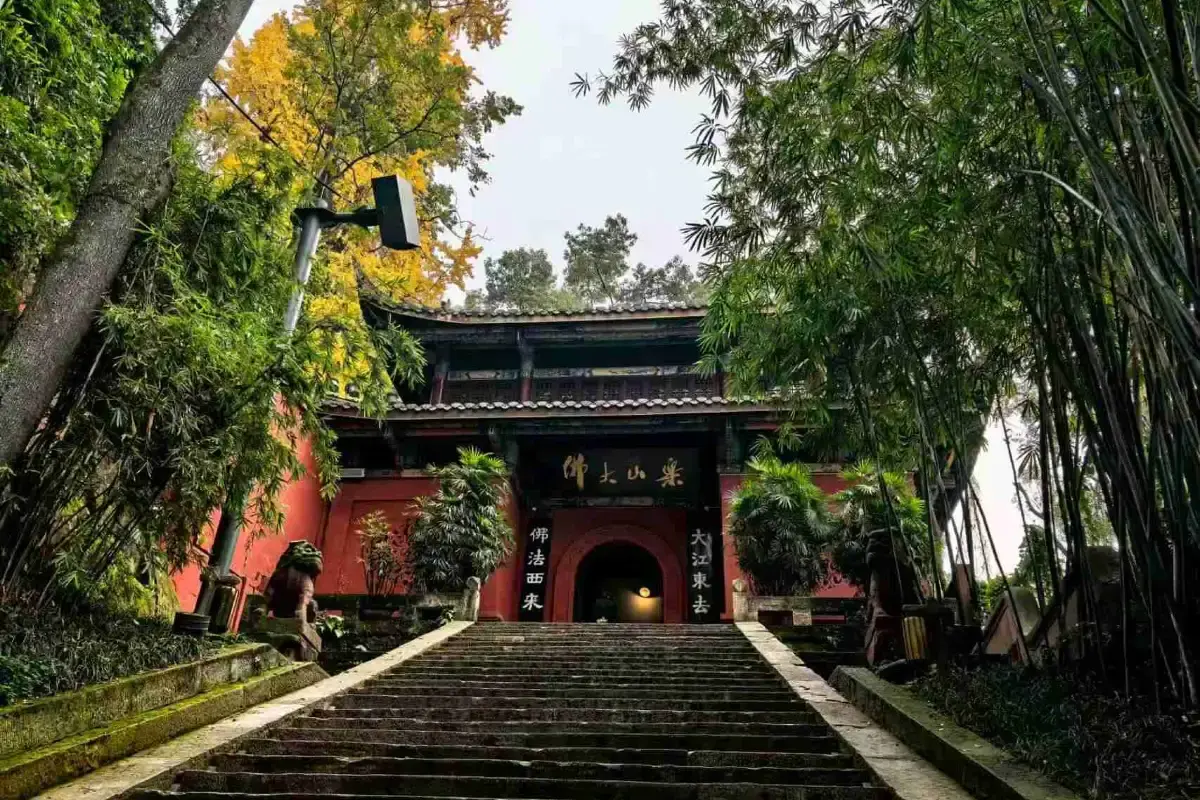
Lingyun Temple is the temple most visitors meet first, because the classic walking route passes through its gates on the way to the viewing platforms beside the Buddha’s head. The temple sits directly above the statue, and its terraces look down over the stone coils of the hair topknot to the wide junction of rivers beyond. Incense burns here more or less continuously, and it is entirely normal to see travellers pause mid-route, join their palms and pray before continuing down to the cliff path.
🏯 The Halls and Courtyards You Will Pass Through
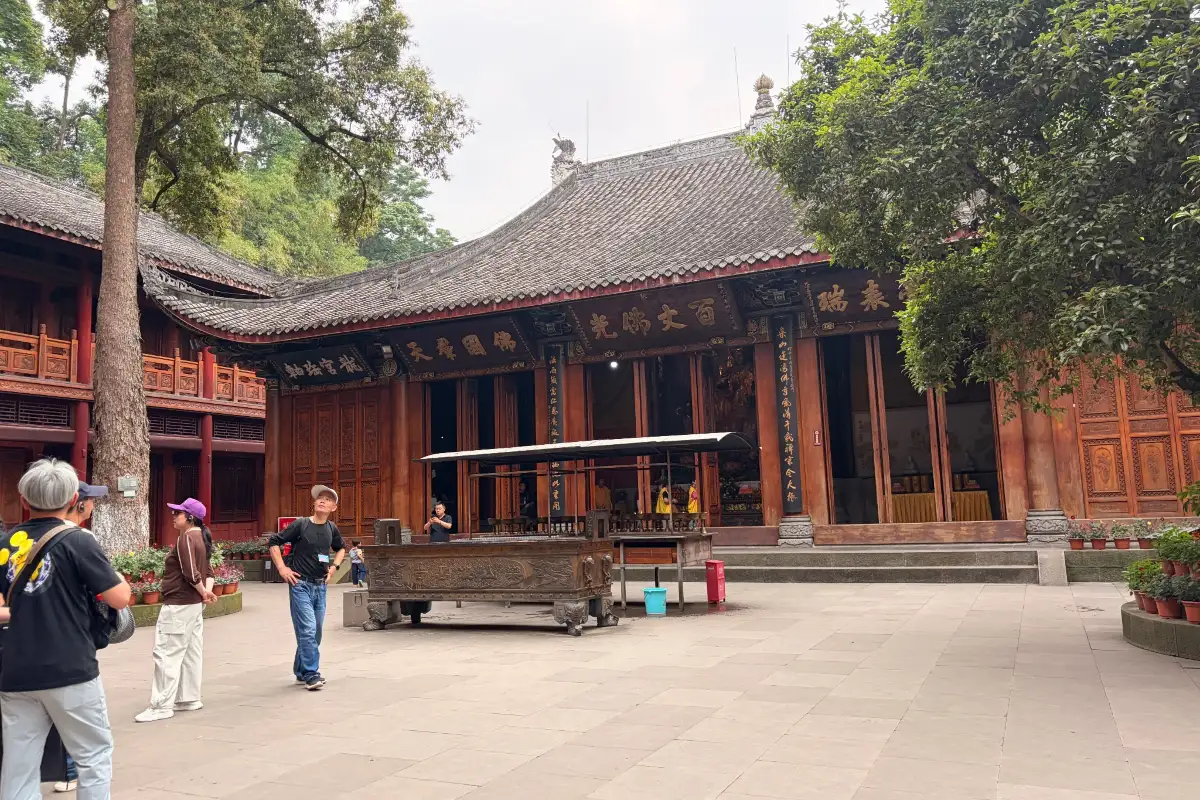
The temple is a compact cluster of halls, pavilions and courtyard buildings arranged along the slope, with dark timber frames, upturned eaves and the smell of incense threading through everything. You do not need long here: most travellers spend around half an hour drifting through the main hall and the terraces. Photographers should note that the courtyards frame some of the best traditional architecture in the scenic area, especially in soft morning light before the tour groups arrive.
🙏 Incense, Prayer and Atmosphere
What surprises many international visitors is how alive the temple feels. There is usually a steady drift of smoke from the burners, a murmur of chanting somewhere in the background, and a lived-in warmth rather than a museum hush. You are welcome to watch, to rest on a bench, or — if it feels right — to join your palms for a moment; nobody will pressure you either way, and that ease is part of the charm.
🌉 Wuyou Temple: The Quieter, Older Sibling
Cross the Haoshang Bridge onto Wuyou Mountain and the atmosphere shifts: fewer tour groups, deeper shade, and a temple that feels older and more contemplative than its famous neighbour. Wuyou Temple is best known today for its hundreds of small carved figures — arhats, attendants and Buddhas tucked into niches along the walls and walkways. Give it 45 minutes to an hour, and it may well become your favourite corner of the whole scenic area.
🧘 Why Wuyou Is Worth the Extra Bridge
Two reasons: the carving and the calm. The niche figures are small, human-scale and wonderfully varied, and because the crowds thin out here you can actually look at them properly. Wuyou also hides one of Leshan’s strangest sights — a Buddha concealed inside the mountain itself — which we cover in detail in our guide to the Buddha within a Buddha at Wuyou Temple.
🪨 Shrines, Niches and Cave Carvings Along the Paths
Between the two temples, the cliff itself becomes a gallery. Along the paths — especially around the Mahao caves and the Zhaiwania area — small Buddhas and bodhisattvas are carved straight into the red sandstone, some in crisp relief and others softened by more than a thousand years of weather. Look closely at walls you would otherwise walk past: a seated figure here, a row of attendants there, a niche still darkened by centuries of incense. If you want even more sculpture, the Oriental Buddha Park at the edge of the scenic area holds thousands of Buddha images, tunnels and galleries, though it requires a separate ticket.
🤲 Temple Etiquette: How to Visit Respectfully
None of this is complicated, and a little care makes you a welcome guest rather than a passing distraction:
- Dress modestly — covered shoulders and knees are the safe default inside temple buildings.
- Keep your voice low in halls and courtyards, especially where people are praying.
- Photography is generally fine in courtyards, but check for signs and avoid flash or close-ups of worshippers at prayer.
- Light incense only at designated burners, and follow the lead of those around you.
- Never climb on statues, niches or altar furniture for a photo.
- Donations are optional; a small contribution at the burner box is appreciated but never demanded.
🗺️ How to String the Temples Into One Walk
The classic route chains the temples together naturally, and the order matters less than the rhythm:
- Enter and walk through Lingyun Temple’s halls while your legs are fresh.
- Descend the Nine-Turn plank road to the feet platform — the site’s signature moment.
- Climb back up and take the Haoshang Bridge across to Wuyou Mountain.
- Wander Wuyou Temple and its niche carvings while your legs recover.
- Loop out past the Mahao cave area, pausing at whatever niches catch your eye.
Done at a comfortable pace with the temples included, plan on 3–5 hours inside the scenic area. If you would like the whole day mapped hour by hour, our one-day Leshan itinerary fits the temples, the Buddha and a food stop into one workable plan. Our complete visitors guide covers the tickets, transport and crowd-timing basics worth reading before you set out.
| Temple or Shrine | Where to Find It | Highlights | Time Needed |
|---|---|---|---|
| 凌雲寺 | Atop Lingyun Mountain, directly above the Buddha’s head | Main halls, continuous incense, terraces over the statue | 30–45 minutes |
| Wuyou Temple | Across the Haoshang Bridge on Wuyou Mountain | Hundreds of small niche carvings, quiet courtyards | 45–60 minutes |
| Cliff niches and Mahao caves | Along the paths around the Zhaiwania area | Small Buddhas carved into the red sandstone | 20–30 minutes |
| 東方佛都 | Edge of the scenic area (separate ticket) | Thousands of Buddha sculptures, tunnels and galleries | 1–2 hours |
❓ FAQs
🎟 Are Lingyun and Wuyou temples included in the entry ticket?
Yes. Both temples sit inside the main scenic area, so the standard entry ticket covers them along with the Buddha himself. The Oriental Buddha Park is the one exception and requires its own separate ticket.
📷 Can I take photos inside the temple halls?
In the courtyards and along the paths, generally yes. Inside the halls, be discreet: check for signs, switch off the flash and never point a lens at someone mid-prayer. A quick glance at staff or fellow visitors tells you the local norm faster than any guidebook.
🙏 Do I need to be Buddhist to enter or to pray?
Not at all. The temples welcome respectful visitors of any background or none. Joining your palms for a moment is a courtesy anyone can offer; skipping it entirely is equally fine.
⏱ How much extra time do the temples add?
Budget roughly an extra 1–1.5 hours beyond a Buddha-only visit if you want both temples at a comfortable pace. Wuyou is the one travellers most often regret rushing, so trim elsewhere rather than skipping the bridge.
🧭 Which temple should I prioritise if I am short on time?
Choose Lingyun if you want the direct connection to the Buddha — you will pass through it anyway on the classic route. Choose Wuyou if you have already seen the statue, value quiet, or love small-scale carving.
Visit the temples as more than pass-throughs and the whole site changes shape: the Buddha becomes the climax of a monastic story rather than a lone photo stop. Wander the courtyards, cross the bridge, and find one small carved figure that speaks to you. When you are ready to plan the day itself, the buttons below will sort your ticket in a couple of minutes.
Ready to See the Giant Buddha?
Tickets start from $11.84 and the scenic area is open 08:00–19:00 (admission ends 17:30).
🎟 Book Tickets on Trip.com 🎫 Check Klook Prices
Affiliate disclosure: as a Trip.com affiliate we may earn a commission when you book through these links — at no extra cost to you.