










Ask travellers what they remember most about the Leshan Giant Buddha and the answer is often not the statue itself but the descent. The Nine-Turn Plank Road, carved straight into the red cliff beside the statue, lowers you from head level to the platform between the Buddha’s feet in a series of tight switchbacks. It is the most talked-about and most queued-for experience in the scenic area, and it deserves a proper plan.
🧾 Quick Facts
- 🕗 Open 08:00–19:00 (admission ends 17:30)
- 🎟 Entry from $11.84 (standard ticket around 80 yuan)
- 👣 Plank-road queue: about 20 min in low season, up to 3–4 h at holiday peaks
- ⚠️ The path is one person wide — descent and ascent use different routes
- 📍 2435 Lingyun Road, Shizhong District, Leshan City
🪜 What Exactly Is the Nine-Turn Plank Road?
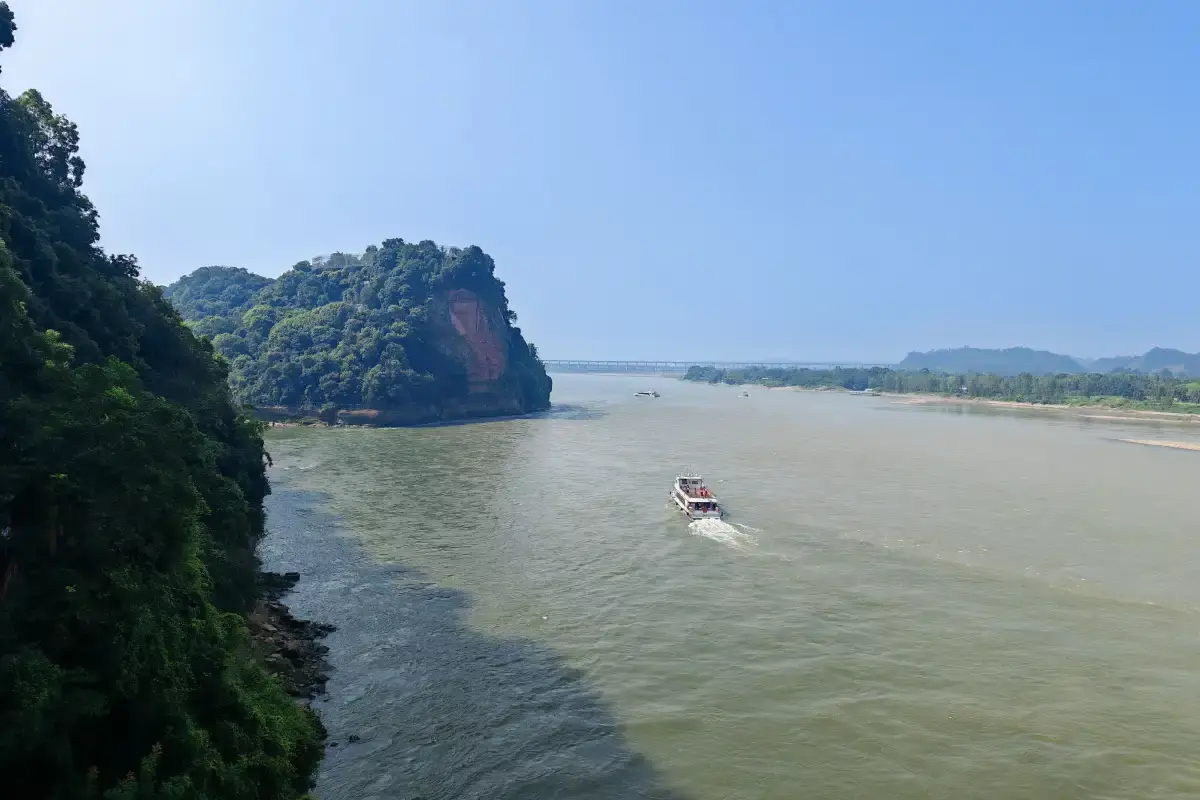
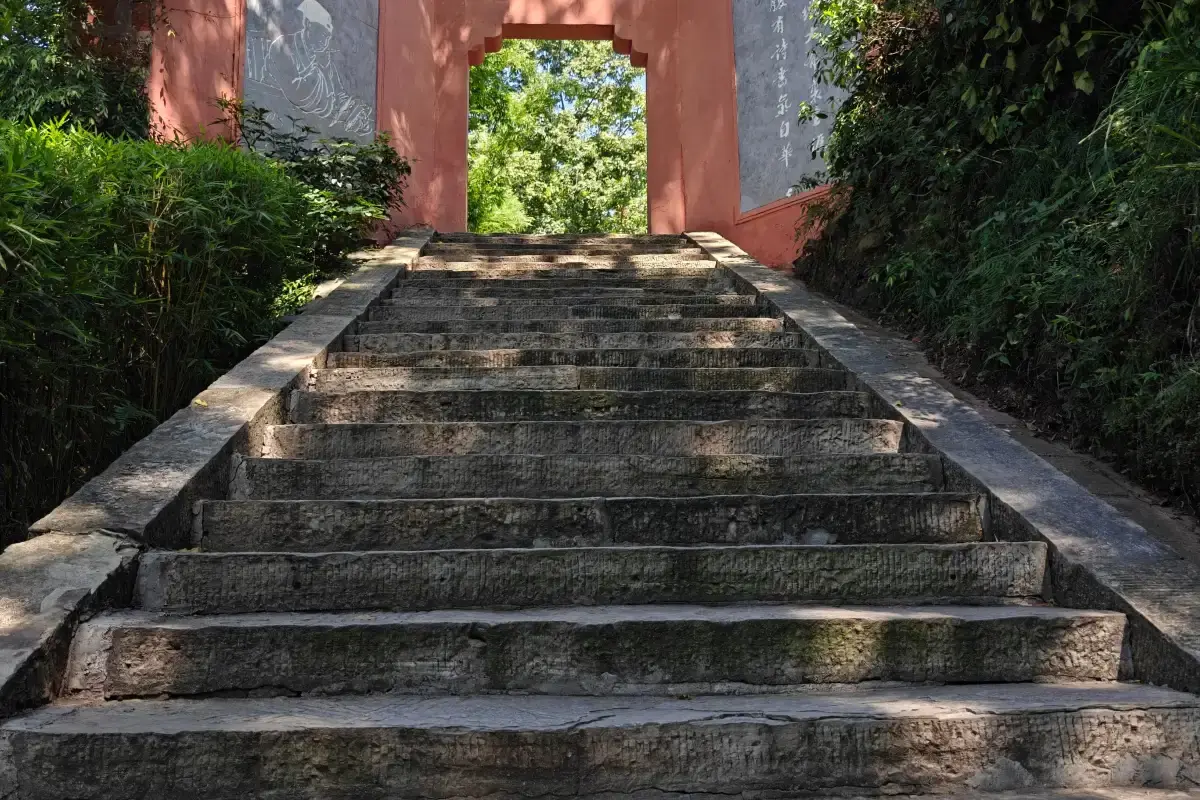
The Nine-Turn Plank Road is a narrow stone staircase cut directly into the red sandstone cliff on the flank of Lingyun Mountain, right beside the Leshan Giant Buddha. It zigzags down from the level of the Buddha’s head — just past Lingyun Temple — to the platform wedged between his enormous feet. The “nine turns” are the switchbacks that give the path its wiggly profile, and because the cliff is nearly vertical, almost the entire route had to be carved out of solid rock.
🔍 Why Travellers Obsess Over It
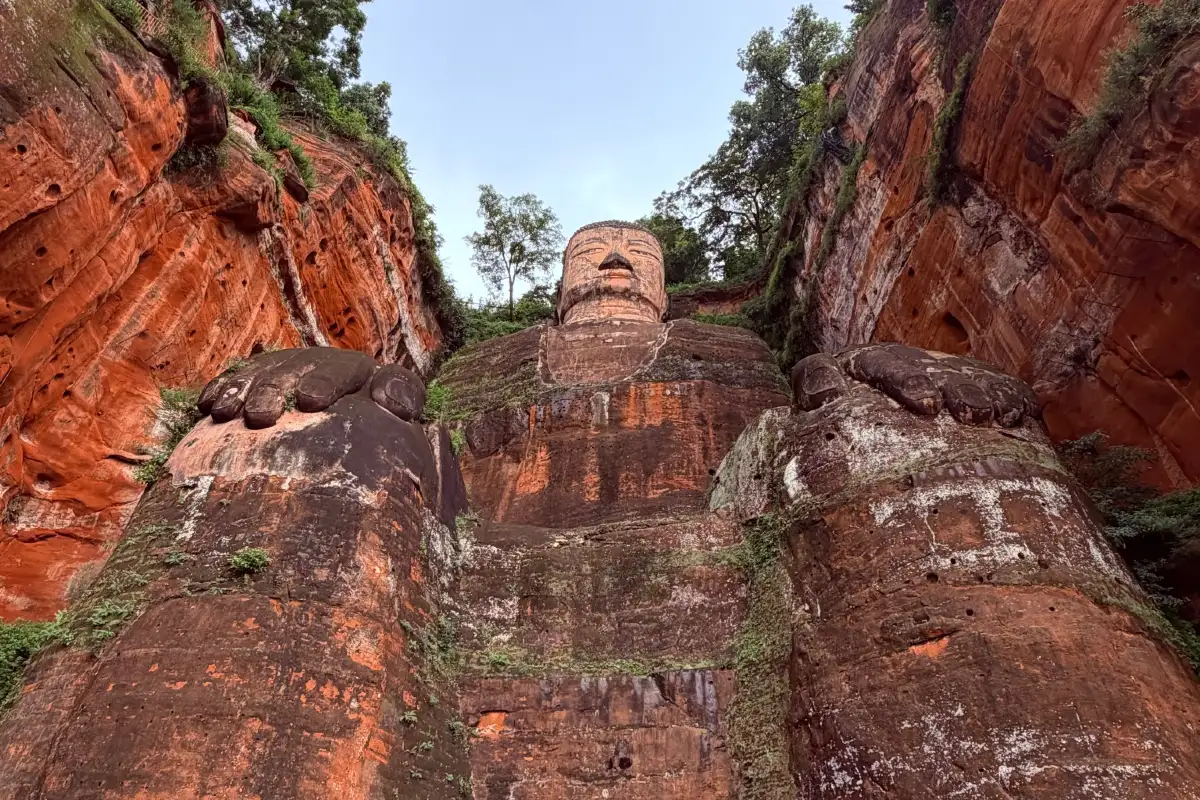
Simple: it is the closest you can get to a roughly 70-metre statue without stepping onto a boat. On the way down you pass within arm’s reach of the spiral hair buns, the long earlobes and the deep folds of the robe. At the bottom, one instep alone can hold more than a hundred people — a detail you cannot judge from the top. That sense of physical scale is a big part of why the site holds a 4.7/5 rating across 33,000+ Trip.com reviews.
🚶 The Descent, Step by Step
The walk is short in distance but long in sensation, because everything about it is steep, narrow and dramatic. Knowing what happens at each stage helps you budget energy, water and camera battery. Here is how the descent typically unfolds.
🎢 From the Head Platform to the First Turns
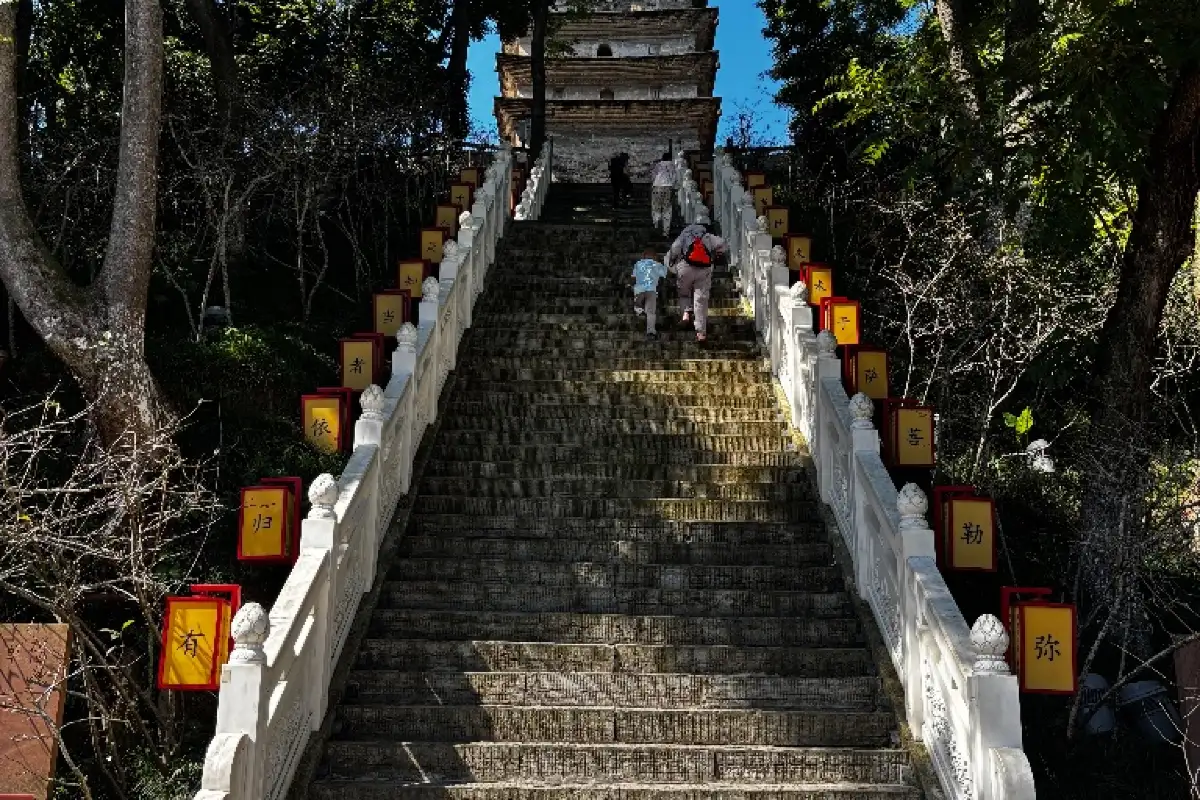
You pick up the path near the Buddha’s head, after exploring Lingyun Temple and its courtyards. The first steps drop quickly, the cliff wall rising on one side while the river glitters far below on the other. Shallow channels are carved into the rock to give your shoes grip, and the path is only one person wide, so whoever walks ahead sets your pace.
👁️ Past the Hair Buns and the Robe Folds
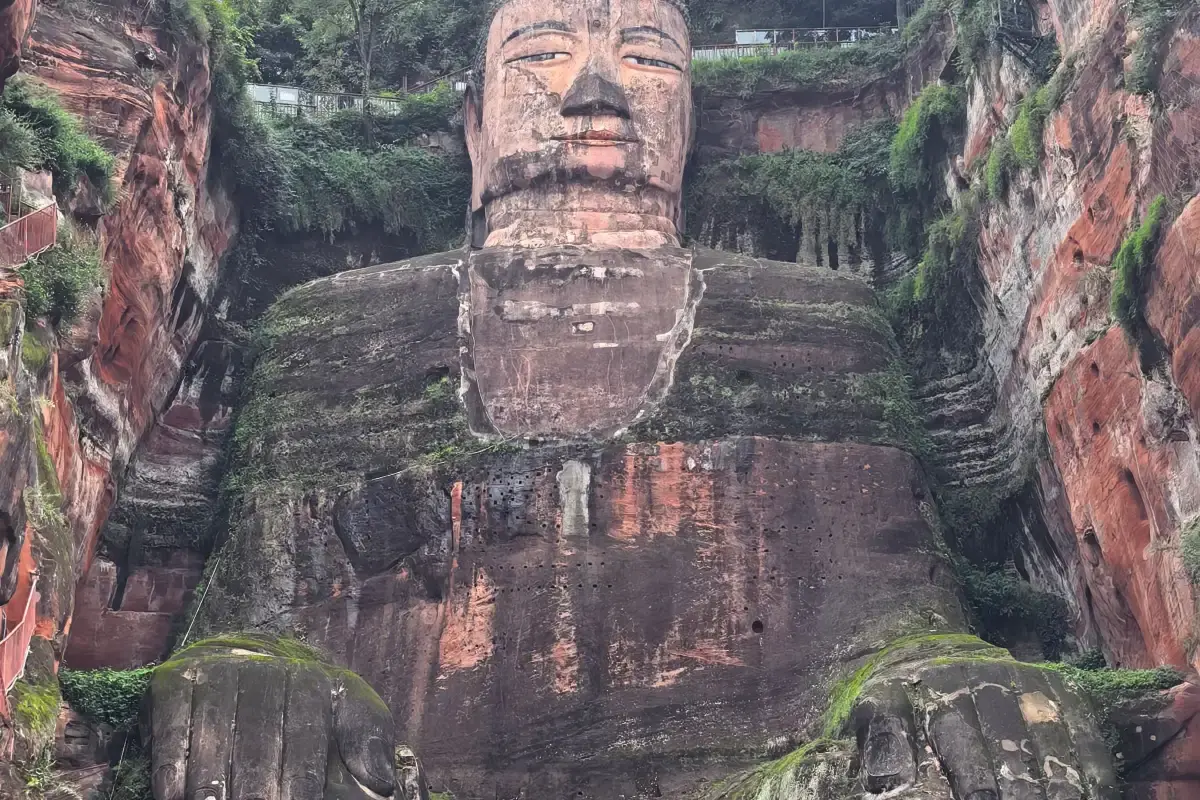
This is the stretch people remember. Turning one corner, you find yourself level with the Buddha’s spiral hair buns, each bigger than a person, stacked above his forehead. A few turns later you are looking down past the deep carved folds of his robe toward his hands resting on his knees. Keep one hand on the rock or rail, and resist stepping backwards for a wider shot — the ledge does not forgive missteps.
🦶 The Platform at the Buddha’s Feet
At the bottom you step onto a paved platform squeezed between the statue’s gigantic insteps. Looking straight up, his face floats roughly seventy metres above you, framed by red cliff walls on both sides. Linger as the crowd allows, then move aside for the next group.
| Plank road at a glance | What you see | Effort | Time |
|---|---|---|---|
| Down — head to feet | Hair buns, ear and robe folds at arm’s length | Steep stairs, single file | 20–30 min plus any queue |
| At the feet | The full roughly 70-metre statue looking straight up | Standing room only, busiest spot | 10–15 min |
| Up — the return route | River, city and cliff views on a separate path | Steady climb, easier on the nerves | 25–40 min |
⏳ The Queue Reality — and How to Beat It
Because the plank road is one person wide, the queue moves at the speed of the slowest climber. On a quiet winter weekday you can be walking down within about twenty minutes. On summer weekends the wait often stretches past an hour and a half, and during Chinese public holidays — Golden Week from October 1–7 or Spring Festival — visitors regularly report waits of three to four hours.
🕣 Timing Tricks That Actually Work
- Arrive before 09:00. Gates open at 08:00, and the first hour is reliably the calmest of the day.
- Or come after 15:30. Tour groups have largely moved on, and admission continues until 17:30.
- Choose weekday afternoons over weekends whenever your schedule allows.
- Avoid Golden Week and Spring Festival if you can; that is when the three-to-four-hour queues happen.
Reviewer experiences back this up with striking consistency: early arrivals describe strolling almost straight down, mid-morning visitors mention hour-plus waits, and holiday travellers warn others to bring patience and water. If your dates are flexible, our best time to visit guide maps the quiet seasons and hours in detail.
🙅 Who Should (and Shouldn’t) Attempt It
Most able-bodied visitors handle the plank road comfortably. But it is genuinely narrow, genuinely steep and genuinely crowded at peak times, so an honest self-assessment before joining the line will save you a stressful hour.
- You will probably love it if you are comfortable with heights and narrow staircases, your knees handle repeated steps, and any children in your group can climb steadily on their own.
- Think twice if you experience claustrophobia — on busy days people stand close behind you with no way past — or if you have vertigo, a recent knee or hip injury, or a heart or breathing condition that long queues aggravate.
- Reconsider carrying a toddler: a wriggling child in your arms on a one-person-wide ledge is hard work for everyone.
Skipping the stairs does not mean skipping the Buddha. The river cruise shows the full face from the water, and the head platform delivers the classic eye-level portrait with gentle walking only — the standard plan for visitors managing mobility, vertigo or very small children. For a full comparison, see our boat cruise versus cliff stairs guide.
📸 Getting the Photos Without Blocking the Path
The best images come from three stations: the head platform for the face, the mid-turns for the upward shot of the hair buns, and the feet platform for the full-height view. On a one-person-wide ledge, shoot quickly, keep your elbows tucked and never step backwards while framing. A phone or compact camera beats a large DSLR here, because you will be climbing with one hand on the rock for most of the descent.
For compositions, settings and the riverside vantage points that capture the whole statue, our Leshan photography guide goes deep.
🌧️ Rain, Grip and What to Wear
The cliff is red sandstone, and red sandstone turns slick when wet. After rain, the shallow channels carved into the steps can hold puddles, so grippy closed shoes matter far more than fashion. Bring a light rain jacket rather than an umbrella — umbrellas are awkward in a single-file queue. Our what-to-pack guide covers footwear and clothing for Leshan’s humid climate in detail.
🦵 The Climb Back Up — Budget Your Legs
Here is the part first-timers forget: the descent and ascent use different paths, and the way back up is a solid staircase climb to temple level. On a hot, humid Sichuan afternoon that climb feels roughly twice as long as the way down. Pace yourself, carry water, and plan a slow courtyard break at Lingyun Temple afterwards. All told, expect the down-and-up loop to take around an hour and a half to two hours on a normal day, including the feet platform and a modest queue.
❓ FAQs
🧾 Is the plank road included in the normal ticket?
Yes — the Nine-Turn Plank Road is part of the standard scenic-area entry, with no separate charge for the descent itself. Entry tickets start from $11.84 on Trip.com, with standard adult admission around 80 yuan; check current prices before you travel.
⏱️ How bad is the queue, honestly?
Roughly twenty minutes or less on quiet winter weekdays, an hour to ninety minutes on busy weekends, and up to three to four hours during Golden Week and Spring Festival. Arriving before 09:00 or after 15:30 is the single biggest time-saver.
👶 Can children walk the plank road?
School-age children who can climb stairs independently usually manage it happily, ideally holding a parent’s hand on busy stretches. Carrying a toddler through the narrow sections is uncomfortable, so families with very small children typically choose the boat cruise instead.
♿ What if I cannot manage the stairs?
Take the river cruise for the full-height view, then enjoy Lingyun Temple and the head platform, which involve gentle walking only. You will still see the face, the hair buns and the dramatic setting without any descent.
☔ Does the path close in bad weather?
The scenic area runs 08:00–19:00 with admission until 17:30, but wet sandstone is slippery and individual sections can be paused for safety after heavy rain. If conditions look doubtful, call the ticket inquiry line on +86-833-2355557.
Walking the Nine-Turn Plank Road is the moment the Leshan Giant Buddha stops being a photograph and becomes a physical presence. Time your visit around the queue, wear shoes that grip, give your legs credit for the climb back up — and the descent to the feet will be the story you tell about Sichuan for years.
Ready to See the Giant Buddha?
Tickets start from $11.84 and the scenic area is open 08:00–19:00 (admission ends 17:30).
🎟 Book Tickets on Trip.com 🎫 Check Klook Prices
Affiliate disclosure: as a Trip.com affiliate we may earn a commission when you book through these links — at no extra cost to you.