










Ask a dozen travellers when to visit the Leshan Giant Buddha and you will hear a dozen answers — but a clear pattern emerges. Shoulder seasons and weekday mornings win; Chinese public holidays lose badly. This seasonal planner covers the weather month by month, the crowd traps to avoid, rainy-day tactics and the light that photographers chase.
🧾 Quick Facts
- 🕗 Open 08:00–19:00 (admission ends 17:30)
- 🎟 Tickets from $11.84
- ⏱ Recommended time: 3–5 hours
- 📍 2435 Lingyun Road, Shizhong District, Leshan City
- ⏰ Insider tip: arrive before 09:00 or after 15:30
⚡ The Quick Answer
For the best balance of weather and crowds, aim for spring (March–May) or autumn (September–November), and choose a weekday morning whenever you can. Summer is hot, humid and busy; winter is cool, misty and wonderfully quiet. Whatever the season, the most repeated piece of reviewer advice holds: arrive before 09:00 or after 15:30.
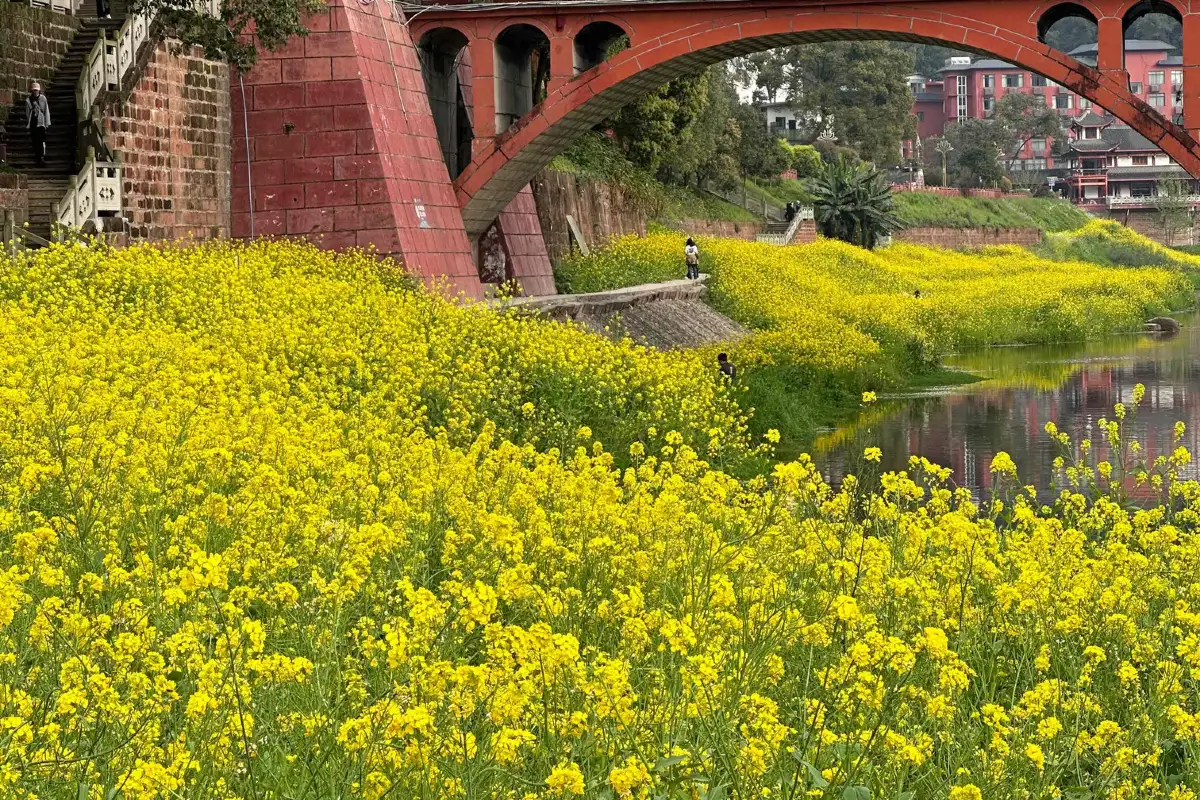
📅 Month by Month: Weather, Crowds and Notes
Sichuan’s climate runs mild and humid overall — hot summers, crisp autumns and cool, foggy winters — and the river valley adds its own misty microclimate. The table below reflects typical patterns rather than guarantees. Check the forecast close to your trip and keep your plans loose.
| Month | Weather | Crowds | Notes |
|---|---|---|---|
| January | Cool, often foggy | Very quiet | Moody river mist; wrap up warm |
| February | Cool; Spring Festival falls late Jan or Feb | Quiet except the holiday | Avoid the Spring Festival dates themselves |
| March | Mild and springlike | Comfortable | Blossom season begins; great walking weather |
| April | Mild, increasingly humid | Comfortable | Green and photogenic; expect some rain |
| May | Warming up | Busy weekends | Pre-summer sweet spot; start early |
| June | Hot, humid, wetter | Busy weekends | Slippery stairs after showers |
| July | Hot, humid, wettest | Busy; summer weekends worst | Carry rain gear; queues build mid-morning |
| August | Hot and humid | Busy; school holidays | Shade and water breaks essential |
| September | Humidity easing | Comfortable | Early autumn calm; some rain remains |
| October | Crisp and pleasant | Extreme Oct 1–7 | Golden Week is the year’s peak — avoid it |
| November | Cool and crisp | Quiet | Late autumn light; shorter days |
| December | Cold, foggy | Very quiet | Fewest visitors of the year |
Two months deserve special care. October pairs the year’s loveliest weather with its worst crowds during Golden Week, while July and August combine heat with busy summer weekends. Neither is a dealbreaker — you just have to plan around the peaks. Once your dates are set, our 2026 visitor’s guide turns the timing into a step-by-step plan.
🙅 The Crowds to Avoid — and the Ones You Can Beat
Three crowd traps dominate the calendar: Golden Week in early October, Spring Festival in late January or February, and summer weekends. In those windows the one-person-wide plank road can back up for 1.5 to 3–4 hours, which reshapes everything else about your day. Train seats from Chengdu and hotel rooms in Leshan tighten at exactly the same time.
The reviewer wisdom cuts the other way, too. Arrive before 09:00 or after 15:30 and you will share the paths with a fraction of the midday throng. One recent visitor described a Sunday afternoon visit with barely any queue at all — and Sundays are generally calmer than Saturdays year-round. Winter weekday afternoons are the quietest combination of all.
🗓 Weekday vs Weekend: the Simplest Swap
If your dates are pinned to a weekend, do not despair — the day you pick matters as much as the month. Saturdays carry the full weekend wave from Chengdu and the surrounding cities, while Sundays thin out noticeably by early afternoon. That matches what visitors report: one Trip.com reviewer described a Sunday afternoon with almost no queue at the feet platform. Shift your visit from Saturday to Sunday and you inherit most of a weekday’s calm.
Pair the swap with the timing rule — before 09:00 or after 15:30 — and even a summer weekend becomes workable. Mid-morning to mid-afternoon remains the crunch zone. Plan your lunch and the cruise outside it.
🌧 Visiting on a Rainy Day
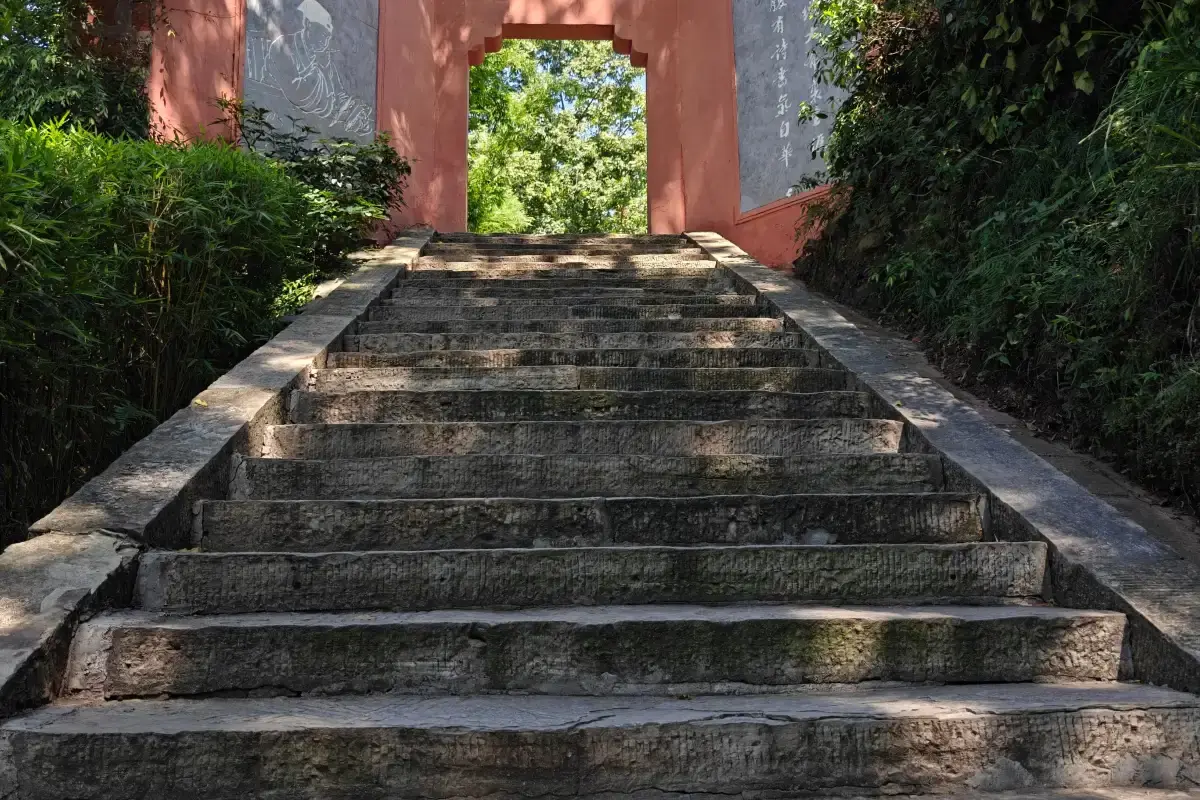
Rain does not close the site, but it changes how you move. The stone steps of the plank road and the temple paths turn slippery, so take the descents slowly and keep one hand for the rail. Light drizzle can even be a gift: thinner crowds, cooler air and mist curling around the cliff.
- Grippy, closed-toe shoes — the single most important swap you can make
- A light rain jacket or a compact umbrella
- A dry bag or zip pocket to keep your phone shooting
- Patience on the stairs — wet stone plus a one-person-wide path means slow traffic
If steady rain settles in for the day, the river cruise keeps you off the wet stairs entirely, and the statue gains a brooding, cinematic backdrop. Our packing checklist for the Leshan Giant Buddha covers footwear, rain gear and layering in detail. Dry shoes in the bag are the difference between a long day and a good one.
❄️ Winter: Mist, Silence and Shorter Days
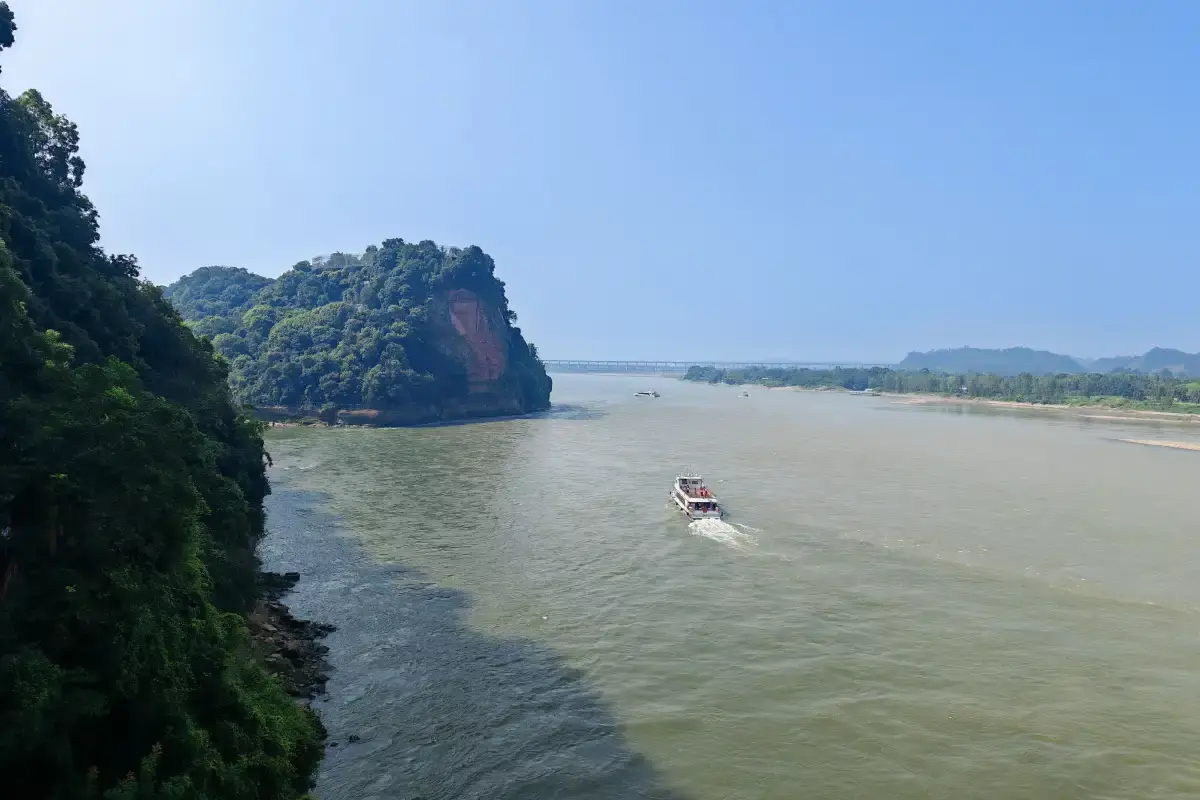
December through February brings the year’s smallest crowds and its most atmospheric conditions, with mist drifting across the three rivers while the Buddha’s outline emerges above. Days are cool, so layer up even when the morning looks sunny. Admission ends at 17:30 and darkness falls early, so start at 08:00 and let the afternoon act as your buffer. If solitude is your priority, winter weekdays are simply unmatched.
🌅 The Best Time of Day for Photos
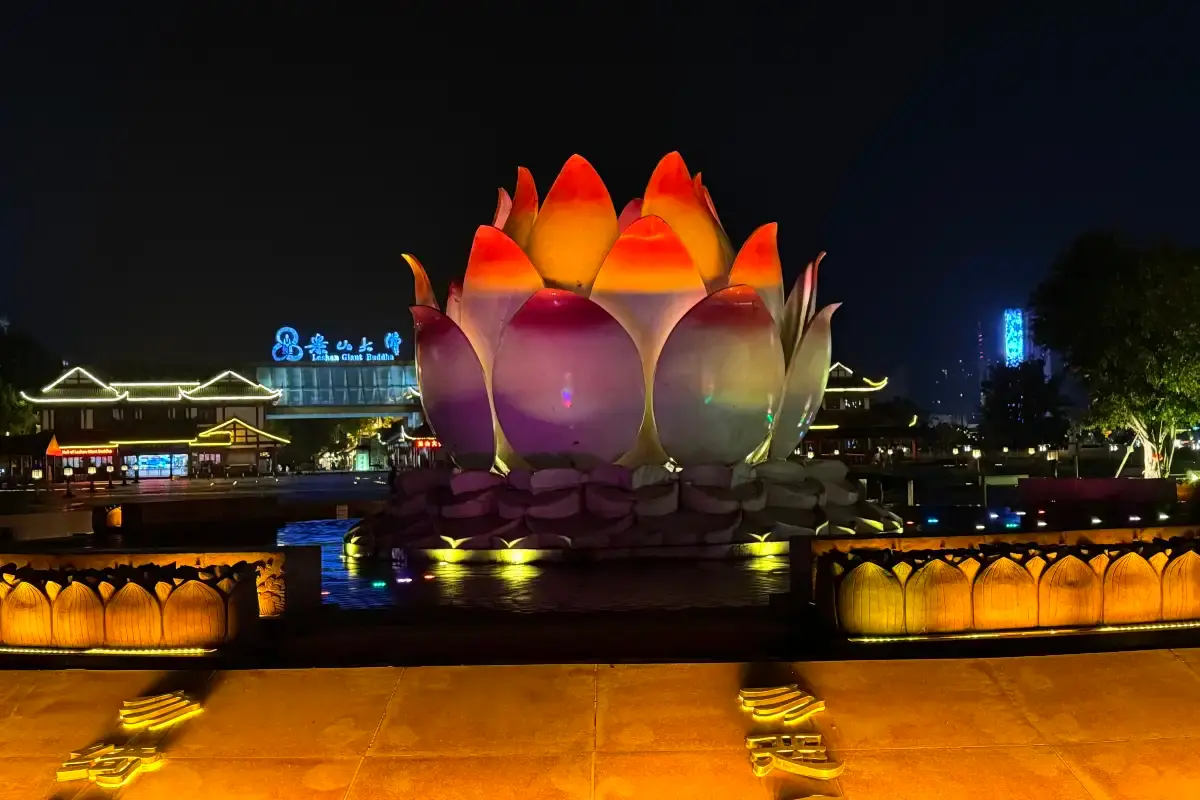
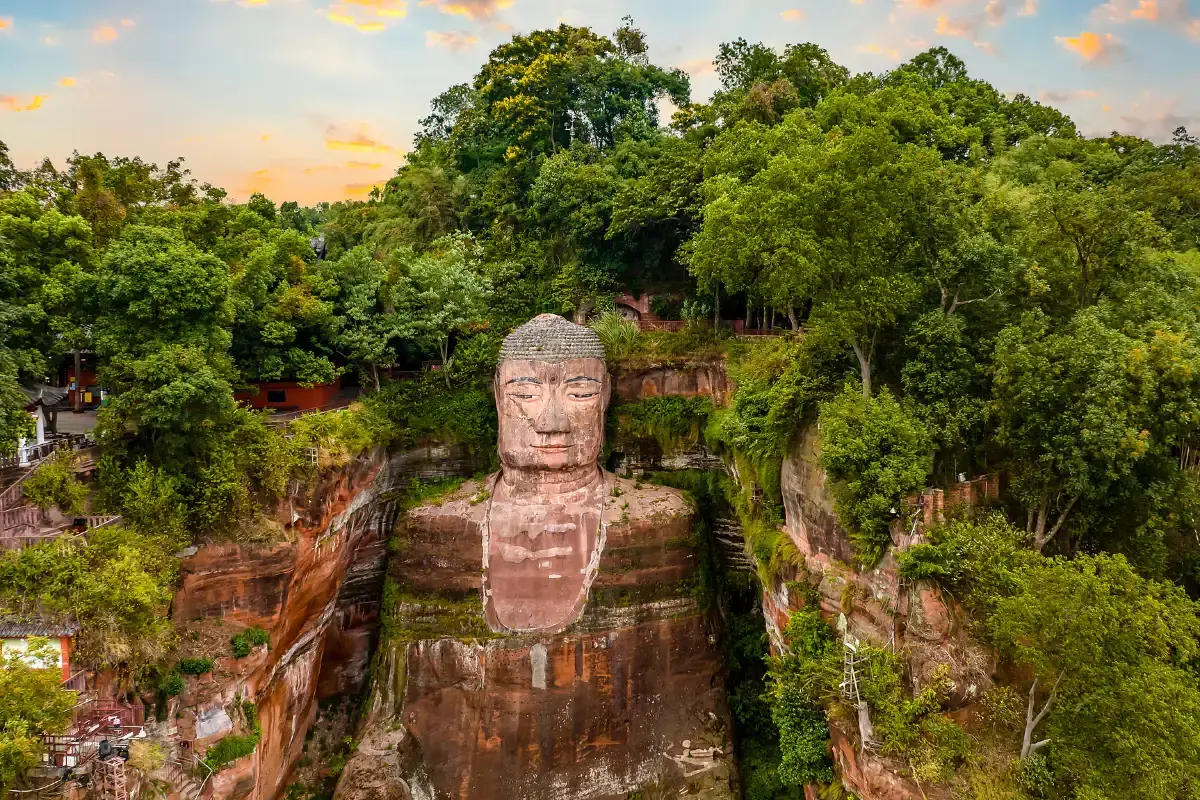
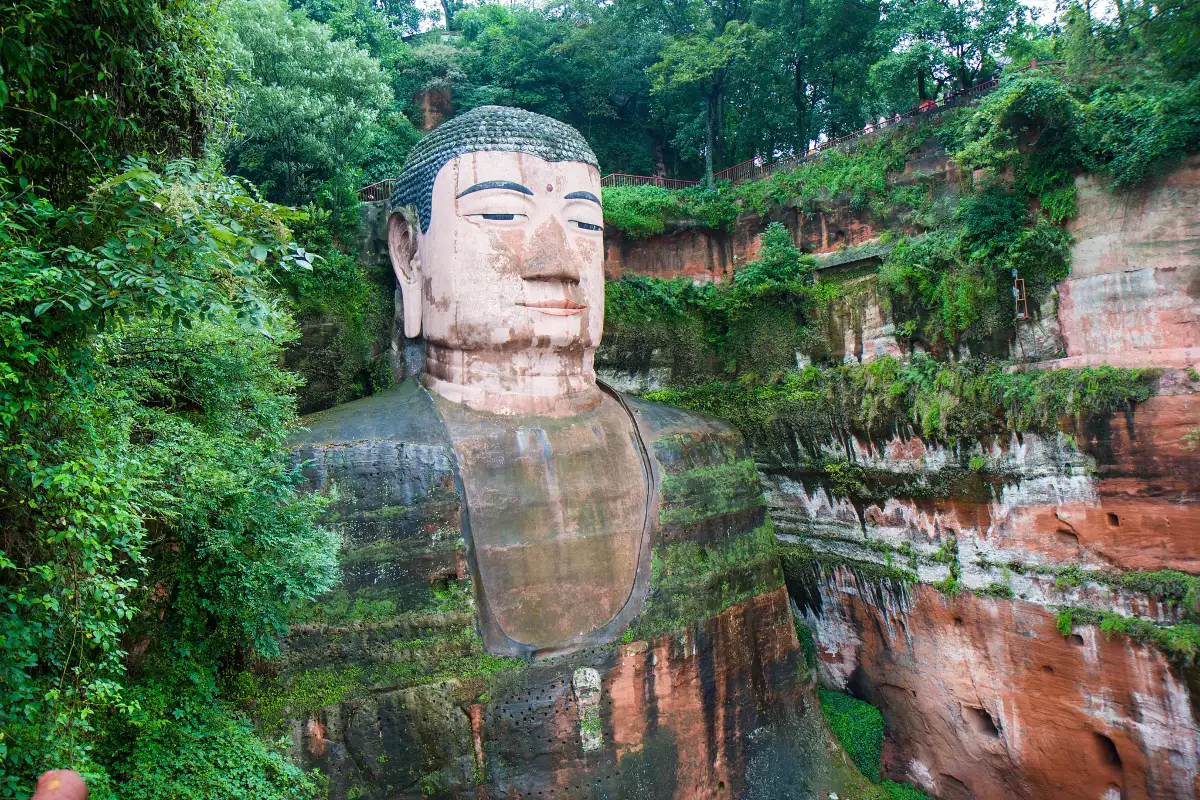
Morning is the classic slot: soft light falls across the Buddha’s face from the cliff-top platforms, and river haze adds depth to wide shots before the crowds thicken. Late afternoon brings golden-hour warmth across the water, when the robe folds glow instead of shadowing. After dark, the riverside lighting gives the statue a completely different character, and night river cruises run for visitors who want the illuminated view from the water.
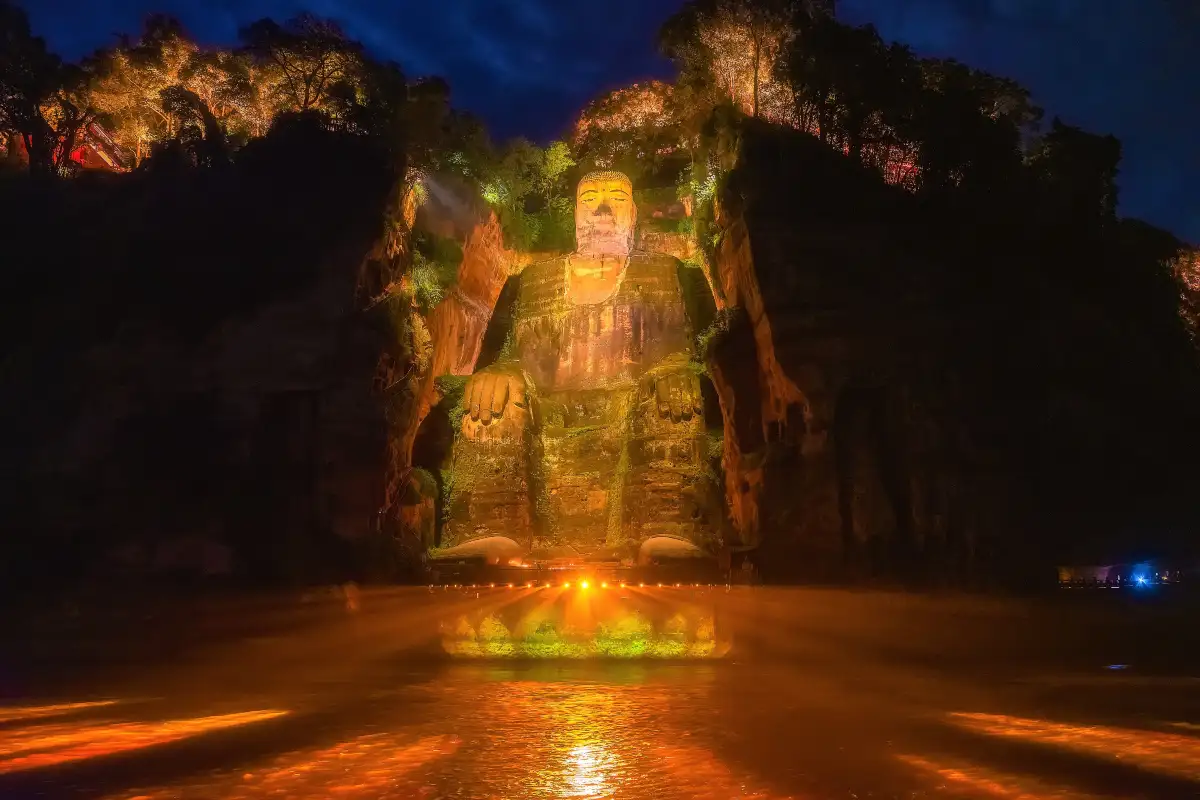
For exact angles at each spot — head platform, plank road, feet platform and the boat — our Leshan photography guide maps them out. Timing and light interact with the descent, too. Shoot the face on the way down, and shoot the robe folds on the climb out in late light.
❓ FAQs
🗓 What is the absolute best month to visit?
April and the stretch from late October into November combine comfortable weather with manageable crowds. October itself is beautiful, but Oct 1–7 is the year’s absolute peak. Spring Festival dates are the other major trap.
🧊 Is it worth visiting in winter?
Yes, if you value quiet over warmth. Winter brings the year’s fewest visitors, moody river mist and easy restaurant seats. Layer up, start at 08:00, and remember admission ends at 17:30.
😱 How bad is Golden Week really?
Expect plank-road queues of 1.5 to 3–4 hours, packed trains from Chengdu and peak hotel prices. If your dates are fixed, book everything far ahead and be at the gate for 08:00. If your dates are flexible, move them.
⏰ What time should I arrive?
Before 09:00 or after 15:30 — the advice almost every recent reviewer repeats. Sunday afternoons are calmer than Saturdays, and weekday afternoons are calmer still. The midday window is the one to avoid.
🌧 Does the site close when it rains?
No, it stays open in the rain. The stone stairs get slippery, so wear grippy shoes and take the plank road slowly. Steady rain is also the perfect excuse to switch to the river cruise.
There is no bad month at the Leshan Giant Buddha — only bad pairings of dates and expectations. Match the season to your tolerance for queues, aim your day at the quiet windows, and let the statue do the rest. Twelve centuries of river mist have made certain of that.
Ready to See the Giant Buddha?
Tickets start from $11.84 and the scenic area is open 08:00–19:00 (admission ends 17:30).
🎟 Book Tickets on Trip.com 🎫 Check Klook Prices
Affiliate disclosure: as a Trip.com affiliate we may earn a commission when you book through these links — at no extra cost to you.